On September 14, the episode of “Osoon” took viewers to the wooded meadow of Palupõhja, one of Estonia’s most species-rich and valuable natural areas. The importance and history of Estonia’s wooded meadows was also discussed by Aveliina Helm, head of our Landscape Biodiversity Group.
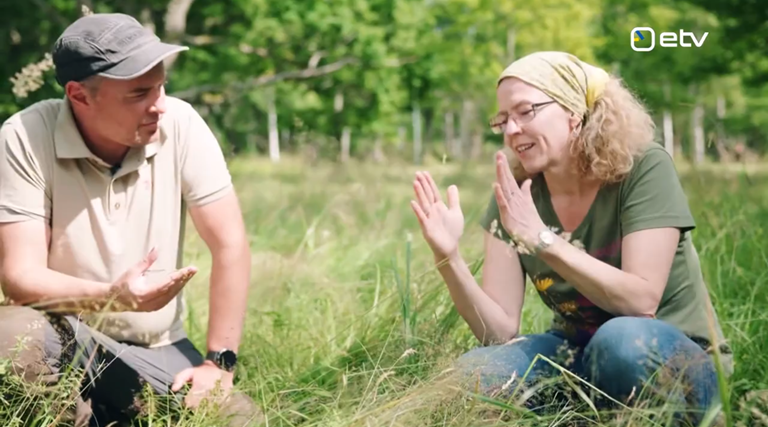 Aveliina Helm and Kristo Elias on the Palupõhja wooded meadow..
Some interesting thoughts from Aveliina:
- Wooded meadows were once widespread landscapes across Europe. They were used for haymaking, grazing, timber production and growing apple trees. However, changes over the past hundred years have meant that we no longer need wooded meadows for food production. As a result, their number in Estonia has declined by as much as a thousandfold over the past century.
- At the same time, Estonia still has more wooded meadows than anywhere else. They are therefore exceptionally valuable habitats. Wooded meadows provide a home for half of Estonia’s plant species, as well as for many insects, pollinators and butterflies.
- The species found in wooded meadows evolved long before humans appeared. Today, we keep wooded meadows open through mowing and grazing, but in the past this role was played by large herbivores that are no longer part of our landscapes. These included aurochs, bison and mammoths, and Europe was once even home to elephants and rhinoceroses. At some point, humans took over the role of these large animals.
- Wooded meadows therefore illustrate an interesting phenomenon: through our actions, we now have the opportunity to maintain the conditions that the species around us actually need.
You can watch the episode here: