On March 20, the 43rd Nature Researchers’ Day was organized by the Estonian Naturalists’ Society, with this year’s central topic being “Nature Restoration and Recovery. Several researchers from FutureScapes also shared their thoughts through presentations and discussions at the event: Aveliina Helm, Triin Reitalu, Eve Veromann, and Raul Rosenvald.
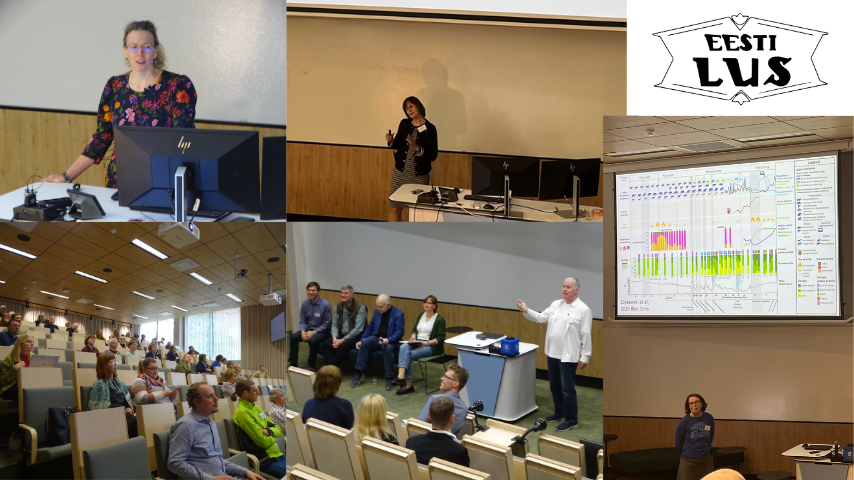 Photos from the day by Katariina Kuusaru ja Neeme Sihv.
Key takeaways from the day:
- Ecological restoration is an activity aimed at helping damaged ecosystems recover their natural functioning by supporting natural processes and the ecological needs of species. It does not mean restoring past conditions, but rather creating functional ecosystems that are resilient and capable of providing benefits for both people and nature in the future.
- To decide whether or not to restore a specific area, it is important to evaluate relevant factors. From an ecological perspective, this includes whether the area provides habitat for local species, whether the ecosystem is functioning well, and whether different habitats are interconnected. It is also necessary to consider the time perspective and near-future climate conditions. In addition, social factors play a role, such as the landowner’s preferences, the presence of livestock in the area (important, for example, for grassland management), and broader societal agreements, regulations, and public opinion.
- A new Ecological Restoration Network has been established under the Estonian Naturalists’ Society. The aim of the network is to promote a more science-based and inclusive approach to ecological restoration and nature-based solutions. Membership is open to anyone whose work or interest is related to ecological restoration, restoration ecology, the implementation of nature-based solutions, nature conservation, environmental management, or practical restoration work.
- The decline of landscape elements (such as hedgerows, field margins, and grass strips) in agricultural landscapes promotes the spread of pests, reduces yields, and increases the use of pesticides. A simple solution is to add these elements back into fields or along field edges, for example by establishing straight grass strips with natural vegetation.