At the end of March, members of FutureScapes Root Ecology Group, Biplabi Bhattarai and Ivika Ostonen, participated in the ForHot network workshop in Catalonia.
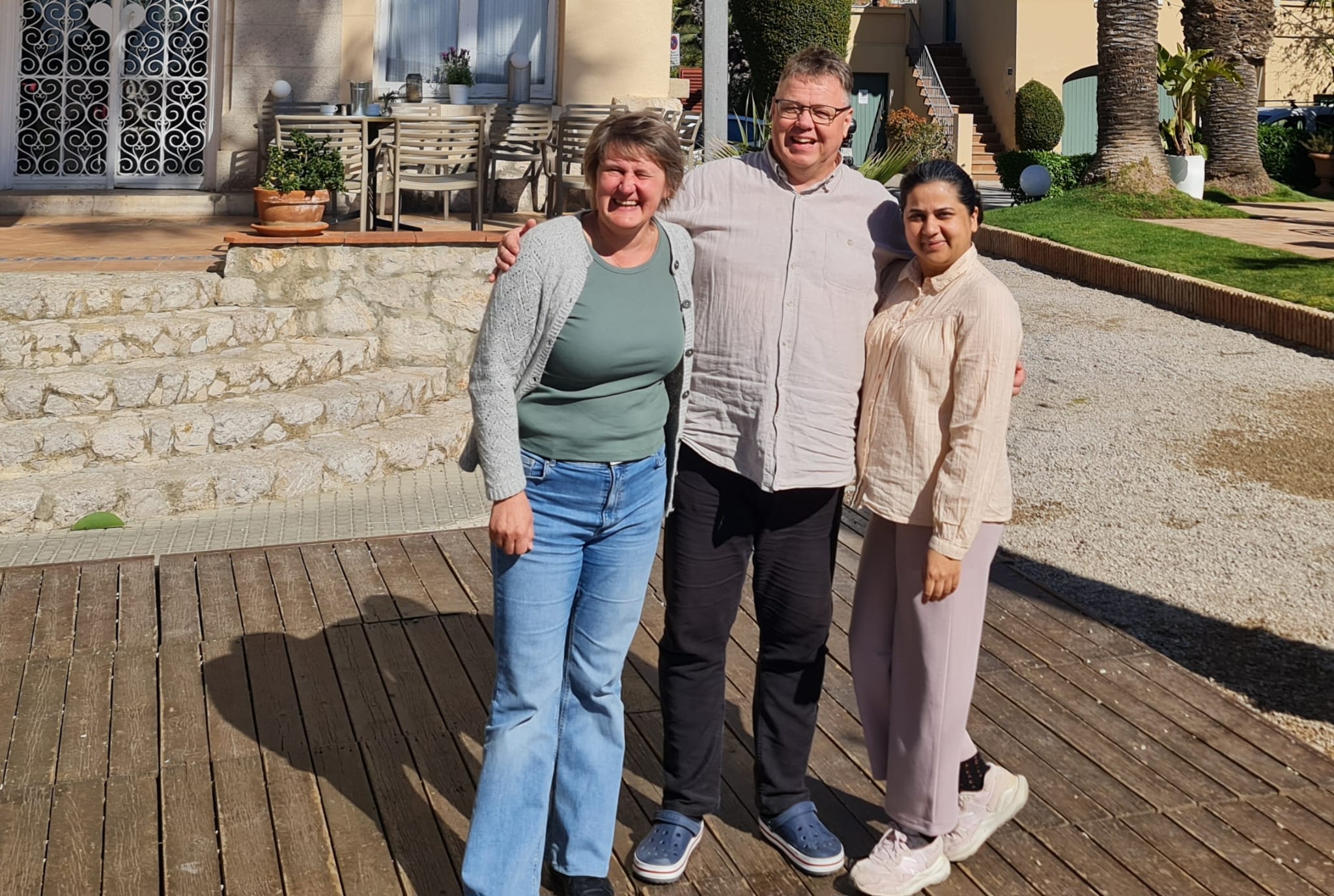 Kadri ja Ivika and Biplabi with Prof Bjarni D. Sigurdsson.
The network was established in 2013, five years after the eruption of Eyjafjallajökull, when newly opened geothermal systems created a unique opportunity to study how subarctic forests and grasslands respond to climate warming, including significantly increased soil temperatures.
Under changing environmental conditions (e.g. due to climate or land-use change), ecosystems attempt to adapt, but may also shift into entirely new stable states. These shifts are often accompanied by losses in biodiversity and carbon storage. We still do not know exactly when such major changes occur, mainly because long-term and complex ecosystem data are scarce.
To address these questions, the ForHot network has been collecting data for over 13 years to understand how far ecosystems can adapt and where their limits lie.
The network is led by Prof Bjarni D. Sigurdsson, who is also a member of FutureScapes international Advisory Board. In collaboration with him, we are developing the ability to predict how much change ecosystems can withstand and to better assess related future risks.